Where the Heck Is the Kitchen?
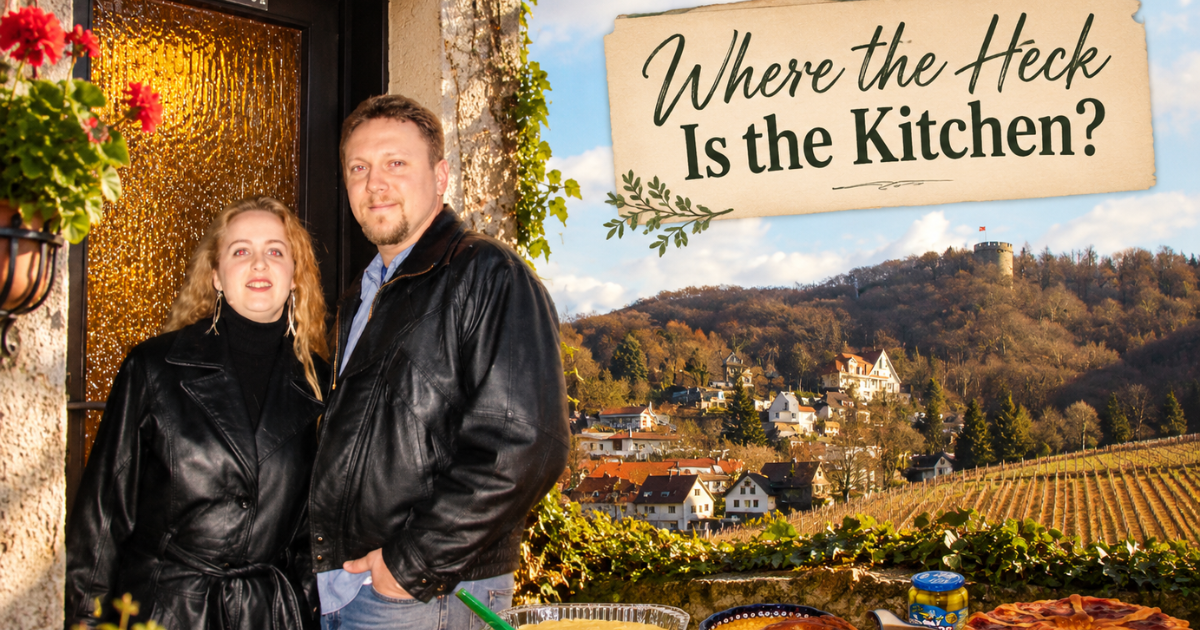
We had been living in Germany for a little over a year when we finally admitted something to ourselves.
We loved it, and we weren't leaving anytime soon.
Up until then, we'd been living a little like people with one foot still out the door. We'd spent less than a year in Bavaria, where we'd rented a gorgeous home with a magnificent Alpine view, beautiful woodworking and built-ins everywhere. That house—and that region—deserve their own story. Perhaps someday I'll get to share it with you.
Then we'd moved to Rhineland-Pfalz for a spell and rented a fully furnished apartment. But by the time we landed in Hessen, it was becoming pretty clear that Germany wasn't just a temporary stop anymore. We were going to be there for a while, and we were ready for a place that actually felt like home.
So, we started looking.
We found an English-speaking real estate agent named Olaf, a middle-aged German man who was wonderfully helpful and, as it turned out, about to teach us something I would never have dreamed could be an issue when looking for a rental.
Finding a house wasn't particularly easy. We had three kids, which made us a fairly large family by German standards, and we needed enough bedrooms for everybody. Multigenerational living is much more common in Europe, though, so there were houses designed for grandparents, parents, children and sometimes a few other branches of the family tree for good measure.
We weren't looking for quite that much togetherness. I love my family, but everybody needs a door they can close from time to time.
Somewhere on the lower end of the multigenerational spectrum, though? That we could work with.
It took Olaf a while to find something that met our criteria, but eventually he called and told us he thought he'd found a place. Did we want to take a tour?
Absolutely.
The townhouse sat at the edge of a small village, at the base of a mountain with an old stone fortress perched near the summit.
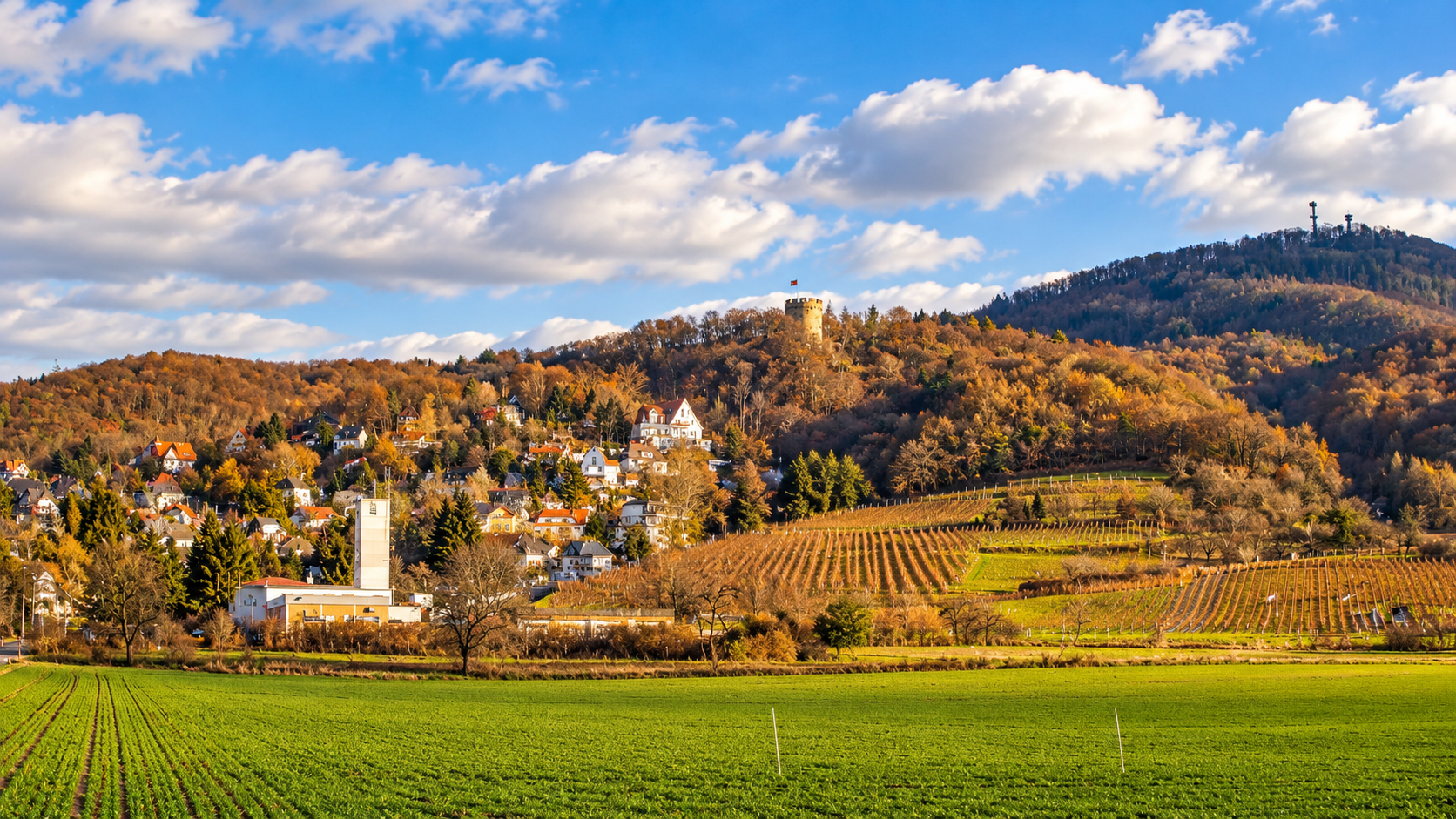
I loved it. Dave loved it. We hadn't even figured out where everybody was going to sleep yet, and I was already imagining waking up and looking out at that fortress every morning.
The house had four levels. The basement had a laundry room, an office, another bedroom or storage space and walkout access. The main floor gave us plenty of communal living space. The next floor had three bedrooms and a full bath, which meant each of the kids could have a room of their own. Then, at the very top, there was this wonderful open loft with skylights and a view of the fortress that would make a perfect master bedroom.
It was damn near perfect.
We walked through that house three, four, maybe five times. We discussed which child would get which bedroom, where we'd put the furniture, what we'd do with the extra space in the basement. We wandered around the ground floor, which was mostly open, with several spaces flowing into one another and a smaller area tucked off the larger rooms.
Everything worked.
Except something was bugging me.
I couldn't put my finger on it at first. I just had this nagging feeling that I was missing something. Finally, somewhere around our fourth or fifth pass through the main floor, I leaned toward Dave and whispered, “Where is the kitchen?”
He looked around.
Then he looked at me.
“Um...that is a very good question.”
And that, of course, made us both start giggling because now that I'd said it out loud, neither one of us could find the damn thing.
So we walked through the house again.
Surely two reasonably intelligent grown adults had not toured the same house four or five times and somehow overlooked an entire kitchen.
Maybe we'd missed it upstairs? Nope.
Basement? Definitely not.
Maybe that smaller space off the main rooms was somehow the kitchen and we'd missed a door, or a nook, or...hell, I don't know. At this point we were looking for evidence. A pipe. A cabinet. A rogue faucet sticking out of a wall.
Something.
Nothing.
Eventually, there was no dignified way around it. We were going to have to admit to Olaf that we couldn't find the freaking kitchen.
So I asked.
“Where is the kitchen?”
Olaf looked at me completely deadpan, but there was just enough confusion on his face to make me suspect that somehow I was the one asking the strange question.
“We're standing in it.”
I looked around.
Four walls.
That's it.
No cabinets. No countertops. No appliances. No sink. Nothing that said kitchen unless you had considerably more imagination than I did.
“Where are the cabinets? Where's the sink?”
Now Olaf looked genuinely puzzled.
“You did not bring your kitchen with you?”
I'm sorry.
Bring my kitchen?
No, Olaf. I did not bring my kitchen.
It had never once occurred to me that the kitchen was something I should pack.
In all fairness, there had been warning signs.
One of the first things we'd noticed when we walked into the townhouse was that there weren't any light fixtures. Not outdated fixtures. Not ugly fixtures somebody had picked out in 1974 and we'd immediately want to replace.
There were no light fixtures. Zero. Nada. Zilch.
Just wires hanging out of the ceilings.
Naturally, we'd asked Olaf what the heck was going on with that situation. He assured us nothing was wrong. Germans liked their own light fixtures. They chose them to match their furniture and decorating style, and when they moved, they took it all with them.
Okay.
That was odd to us, but whatever. We could buy lights. Ceiling fans. Lamps. We'd figure it out.
Besides, Olaf seemed almost as surprised that we didn't own a collection of traveling light fixtures as we were that somebody would unscrew every damn light fixture from the ceilings before moving out.
But a kitchen?
That was an entirely different matter.
Because, as we were now learning, the kitchen could go with you, too. Cabinets, countertops, sink—and all the plumbing that went with the damn thing—appliances. The whole kit and caboodle.
Apparently I had arrived in Germany woefully unprepared, dragging along all sorts of useless crap like clothes, linens and cooking equipment while operating under the completely unreasonable assumption that the house would already contain a freaking sink.
Or at least pipes for the dang thing.
This was a problem.
We weren't planning to stay in Germany forever. Buying an entire kitchen, having it installed and then figuring out what the heck to do with it when we eventually left didn't make much sense.
Olaf thought about it for a minute and said he'd ask the landlord if he happened to have an extra kitchen we could rent.
A kitchen.
We could rent a kitchen.
Because apparently having a spare kitchen in storage was also a perfectly normal thing people could say in these parts.
And wouldn't you know it, our landlord had one.
For an extra €100 a month, he had his spare kitchen installed for us, and just like that, we had ourselves a kitchen.
Sort of.
Now, you'd think that would have answered my questions about this whole kitchen business, but it didn't. If anything, it left me with more.
A while later, after we'd settled into the house, we enrolled the kids in an international school a few villages over. One of the wonderful things about that school was that I ended up in this group of moms from all over the world—Belgium, France, Romania, Norway, England, Brazil, India, Japan. You could sit around a table and hear half the world represented in the conversation.
By then, the kitchen thing had been rolling around in my head long enough that I needed answers.
Was this really a German thing?
Or was this, God forbid, another only Americans don't know this sort of thing?
Because we'd certainly encountered our share of those.
So one day I asked the other moms.
“Did y'all bring your kitchens with you?”
The Belgian mom didn't even hesitate.
“Yes, of course.”
Then she looked at me.
“Did you not bring yours?”
Well, crap.
There it was again.
The same look Olaf had given me.
No. No, ma'am, I did not bring mine. Because until arriving in Hessen, I had never once in my life considered my kitchen a portable possession.
Then everybody started chiming in, and instead of giving me the validation I had clearly been hoping for, most of them had, in fact, brought their kitchens with them.
Not only that, now they were discussing them.
One liked this particular feature in hers. Somebody else loved something about hers and couldn't imagine giving it up. These women had opinions about their kitchens because, of course, they'd chosen them. They had designed them around the way they cooked and the way their families lived, and why on earth would they leave all of that behind just because they were moving?
Even the mom from Brazil had brought her kitchen.
If memory serves, I think it was the mom from Japan, the mom from India and me standing together over on Team Why the Heck Would I Ship an Entire Kitchen?
So I felt somewhat vindicated.
Not extremely vindicated, mind you.
But I'll take what I can get.
Meanwhile, the little kitchen our landlord had rented us was busy teaching me a few more lessons about European living.
The refrigerator was about the size of one you'd expect to find in an RV. The sink was a small single basin. There was no garbage disposal. No dishwasher. And the oven was considerably smaller than the ovens I'd grown up with.
We learned exactly how much smaller at Thanksgiving.
Whole turkeys weren't exactly lining the meat cases at the local German markets, but one of our friends managed to get his hands on one and brought it over for me to cook.
I seasoned it. Prepped it. Got the whole thing ready to go. Then I opened the oven door.
Well, crud.
The turkey wasn't going to fit.
And this wasn't some twenty-five-pound, blue-ribbon, county-fair-winning bird that had spent its entire life preparing to ruin my Thanksgiving. It was a normal turkey. Twelve pounds, maybe.
Didn't matter.
It wasn't going in that oven unless somebody had a chainsaw, and I felt like that might defeat the whole traditional-Thanksgiving-dinner thing we had going.
Thus began the Great Turkey Debate.
Could we somehow rearrange it? Different pan? Turn it sideways? Take something apart? And by something, I mean the oven, because I had already spent all that time prepping the damn turkey and wasn't particularly interested in dismantling him.
Eventually, our fully prepped bird had to be transported elsewhere, where a friend helped us find access to an oven large enough to cook an entire American Thanksgiving turkey.
Dinner was saved.
Crisis averted.
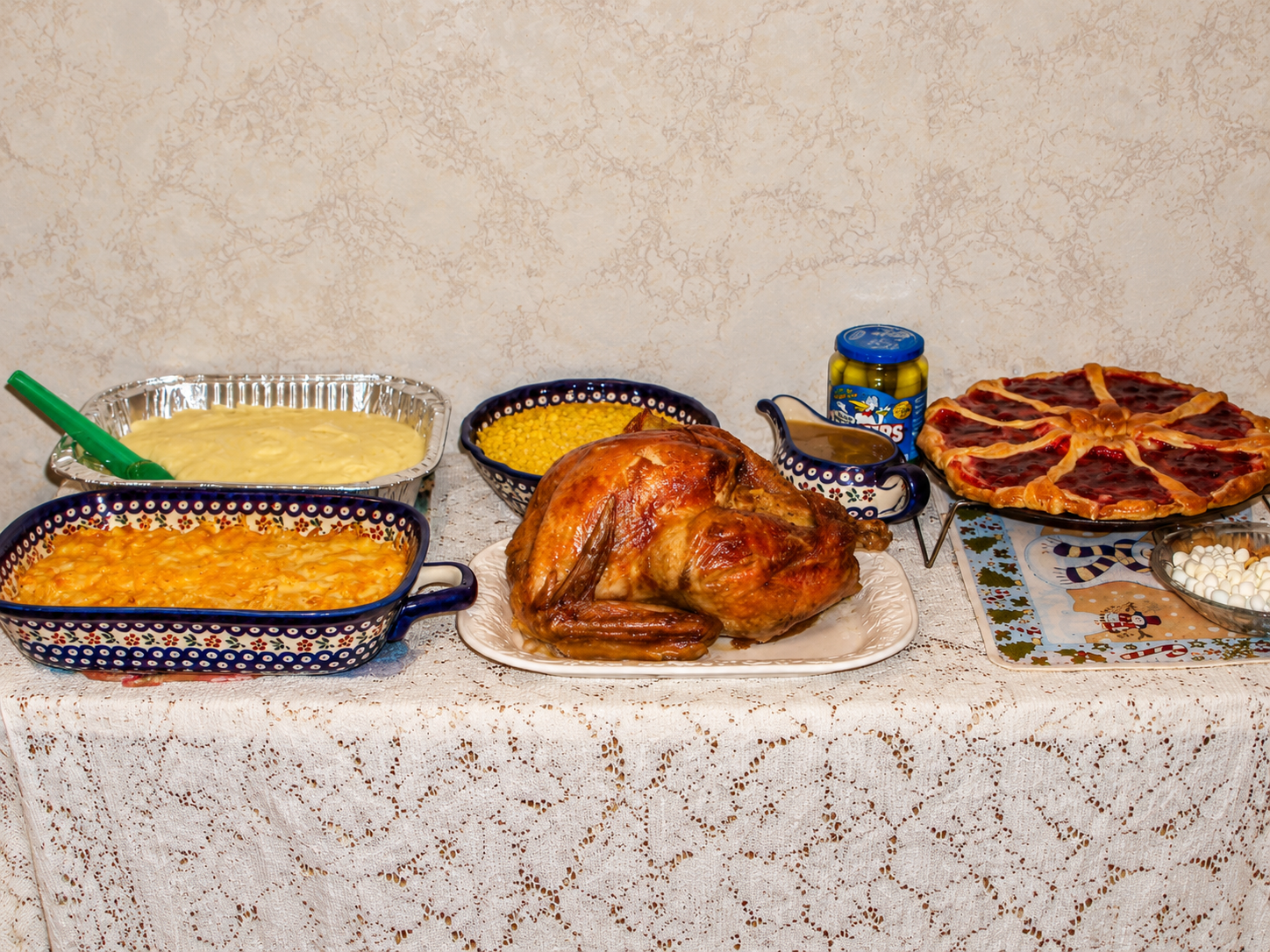
Except Christmas was right around the corner, and I had just realized my rented kitchen had an even bigger problem.
That tiny refrigerator.
See, we'd already survived one German Christmas by then.
And I do mean survived.
The year before, we'd been living in that furnished apartment in Rhineland-Pfalz, which was part of a hotel complex. Christmas rolled around, and we discovered just how seriously Germany takes its holiday season.
Everything shut down.
And when I say everything, I mean everything.
Shops. Services. Even the hotel basically closed up for the holidays. Front desk. Laundry facilities. The whole shebang. And this wasn't for Christmas Day and maybe the day after.
We're talking weeks.
I ended up washing clothes in the sink and hanging them over the radiators to dry, which was an adventure all its own. Feeding a family of five became something of an international scavenger hunt because there was no way our little apartment refrigerator could hold enough food to get us through the closure.
So every other day, we'd venture out looking for somewhere—anywhere—that was open.
A Croatian restaurant came to our rescue. On one occasion, the Greeks saved us. Eventually we found Middle Eastern restaurants and markets in a larger city not too far away, and little by little we figured it out.
We weren't going to starve.
We might all be wearing underwear washed in the bathroom sink, but by God, we were going to eat.
So when Christmas rolled around the following year, I was ready.
I had learned my lesson.
This time I was stocking up beforehand like a woman who had been personally wronged by the previous December.
There was just one tiny problem.
My refrigerator was approximately large enough to hold half a gallon of milk, six eggs and a small packet of deli meat.
So I did what I'd learned to do whenever Germany presented me with another one of these little mysteries.
I asked a German.
One of my neighbors explained it like it was the most obvious thing in the world.
“Oh, you just put it outside.”
I'm sorry, what?
“Outside.”
On the patio.
Of course.
Now, I grew up in north Louisiana. And where I come from, you do not put three weeks' worth of groceries outside and expect three weeks worth of groceries to still be sitting there when you come back.
Hell, you might not have any groceries left by morning.
You might find a raccoon sleeping off the best Christmas of his life. You might find squirrels, rabbits or wild hogs having a block party. If you're very lucky—and I do mean very—you might avoid inviting every bear in the general area over for Christmas dinner.
But your groceries?
Your groceries would be gone.
Germany, however, had a couple of things working in its favor.
First, it was cold.
Not Louisiana, I might need a jacket cold.
Actually cold.
Below freezing and planning to stay that way for months.
And German wildlife, as it turned out, had entirely different priorities.
We knew Germany had wildlife because we'd already walked outside one morning to discover that our car wouldn't start. One of our neighbors came over to help, and between our dubious German and his attempts to explain what had happened, we managed to decipher about every third word.
Eventually, we understood enough to gather that he thought an animal had crawled up into the engine and chewed through the wires.
Now that sounded ridiculous.
Until we opened the hood.
Chewed wires.
We eventually learned that the likely culprit was a Steinmarder, or stone marten, a little member of the weasel family that apparently likes climbing into warm car engines and snacking on the wiring.
Because why eat perfectly good groceries when there's a BMW sitting right there?
So yes, Germany had wildlife.
It just had the good manners to leave your groceries alone while it ate your car.
Once I wrapped my Southern brain around the whole concept, though, storing food outside actually made perfect sense. We'd already learned to put the beer on the porch because, hey, we're Americans and we tend to like our drinks a little colder than the rest of the world. (And if there’s no dishwasher, can you imagine an ice maker? No, of course not. Only Americans are that excessive.) We stored the wine down in the cellar like good little Europeans in the making.
Apparently the December groceries could join the beer.
There was definitely a learning curve to living in a new country, but the funny thing is, most of it wasn't about the things you'd expect. You know the language will be different. You expect different money, different food, different traditions.
It's the things you never knew were traditions that sneak up and bite you in the rear.
I had never considered a kitchen an American expectation. A sink was just part of a house. Light fixtures belonged to the ceiling. Food went in the refrigerator. Wildlife, when given a choice between your groceries and your vehicle, obviously ate the groceries.
Except none of those things were universal truths. They were just the way I'd always known them to be.
And I loved that.
I loved Germany. I loved learning how other people lived. I loved discovering that there were a hundred different ways to do the same ordinary thing, and that sometimes the way I'd been doing it my whole life wasn't necessarily the only way—or even the best way.
That didn't mean I started packing cabinetry every time we moved.
We never did become German enough to even take our light fixtures with us. When we eventually left that house, we left every last one of those suckers hanging right where we'd put them.
But I will tell you this.
Every house I've walked into since then has gotten one quick glance toward the kitchen.
Just to make sure somebody remembered to leave the dang thing.
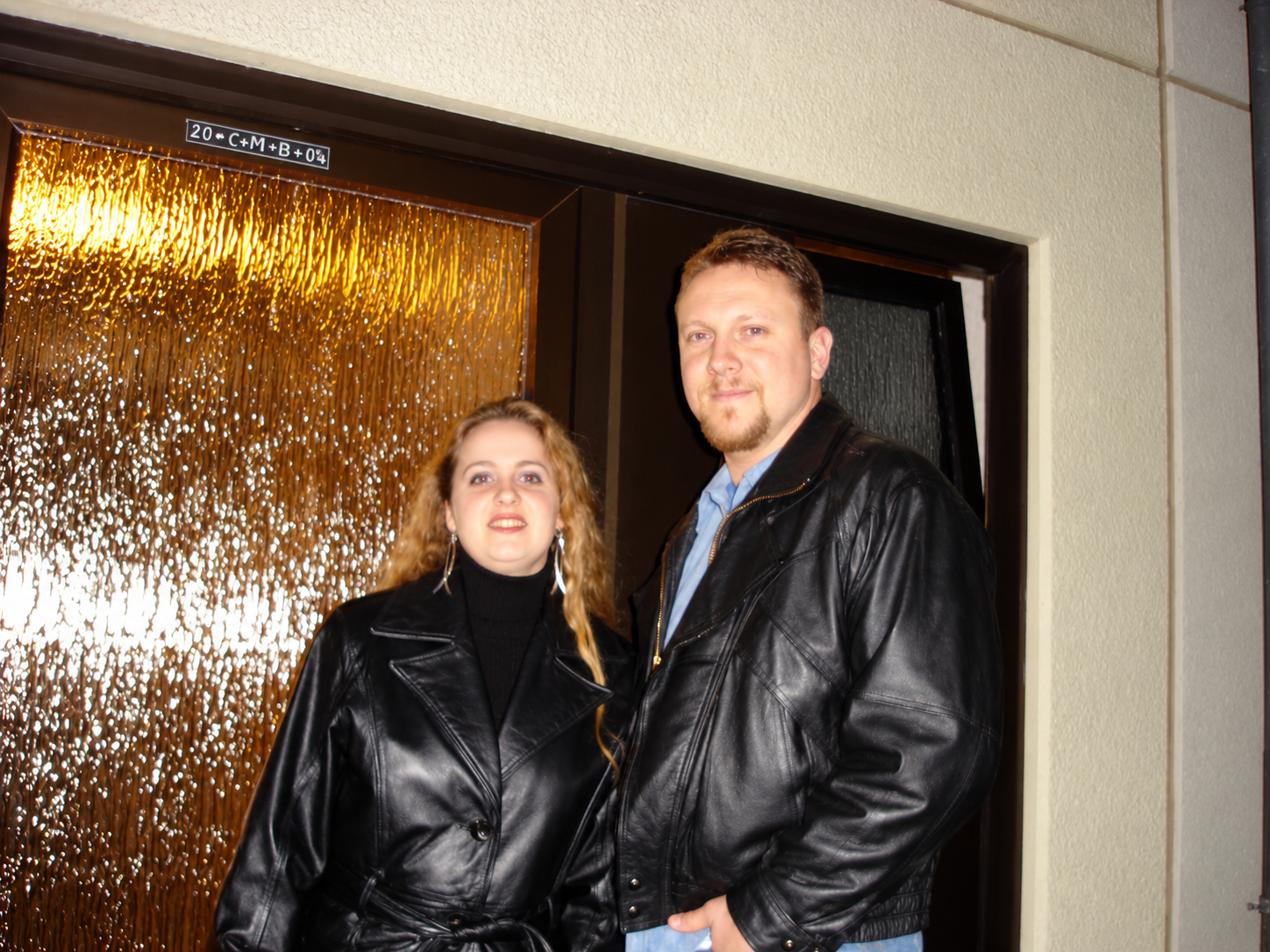
And yes, that's THE door. If you've read The Naked Truth, you already know.
Pull up a chair. I've got more to tell you.
If you enjoyed this little adventure, I hope you'll stick around. There are plenty more stories from the road, the kitchen, and everywhere in between. Some are funny, some are a little messy, and every one comes with a story worth sharing.
Join my newsletter and we'll keep the conversation going.
Well, look at you! You're officially along for the ride!
Thanks for joining me! I'm tickled to have you here. There are plenty more back roads to wander, good meals to find, and stories that probably shouldn't be nearly as funny as they are.
Keep an eye on your inbox. You never know where we're headed next!
— Dollie Jean